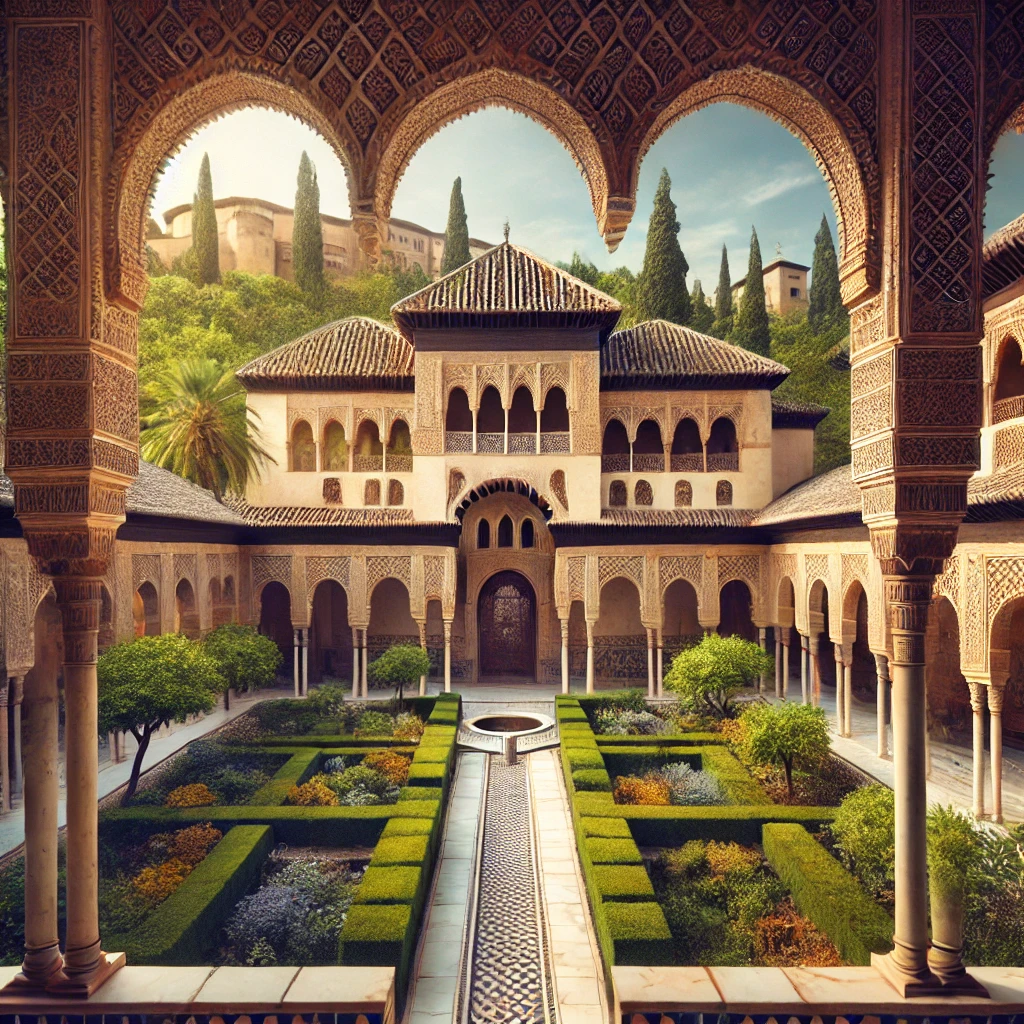
Perched on a hill overlooking the city of Granada, the Alhambra is one of Spain’s most treasured landmarks and a breathtaking example of Islamic architecture. Originally built as a small fortress in 889 AD, it was expanded in the 13th century by the Nasrid Dynasty, transforming it into a sprawling palace complex. Today, the Alhambra is a UNESCO World Heritage site and a symbol of Moorish culture and history in Spain. Here’s a guide to exploring the beauty and significance of this magnificent palace.
The Historical Significance of the Alhambra
The Alhambra was built during the height of the Nasrid Dynasty, the last Muslim rulers in Spain, and served as a royal palace, fortress, and court. Following the Reconquista, it became the court of Ferdinand and Isabella, the Catholic Monarchs. Over the centuries, the Alhambra has inspired poets, architects, and historians with its stunning design, which combines Islamic artistry with a profound sense of harmony and spirituality.
Key Historical Highlights
- Nasrid Dynasty: The Alhambra was constructed by the Nasrid emirs, who were known for their skilled artisanship and devotion to Islamic architectural styles.
- The Catholic Monarchs: After the Reconquista in 1492, King Ferdinand and Queen Isabella made the Alhambra their royal court, adding Renaissance elements to its architecture.
- UNESCO World Heritage Site: In 1984, the Alhambra was designated a UNESCO World Heritage site, preserving its cultural and historical significance.
Exploring the Palaces and Gardens of the Alhambra
The Alhambra is a complex of palaces, courtyards, and lush gardens, each reflecting the elegance and artistry of Moorish architecture. Visitors can explore intricately designed rooms, stunning arches, and tranquil courtyards adorned with fountains and pools. The site includes the Nasrid Palaces, the Generalife Gardens, and the Alcazaba fortress, each offering unique insights into Moorish design and aesthetics.
Must-See Sites at the Alhambra
- The Nasrid Palaces: The highlight of the Alhambra, the Nasrid Palaces feature lavishly decorated rooms, intricate stucco work, and beautiful calligraphy. Key sections include the Hall of the Ambassadors and the Court of the Myrtles.
- The Generalife Gardens: Originally the summer palace of the Nasrid rulers, the Generalife is a peaceful retreat filled with landscaped gardens, fountains, and lush greenery, providing breathtaking views of the surrounding Sierra Nevada mountains.
- The Alcazaba: The oldest part of the Alhambra, the Alcazaba is a fortress with watchtowers that offer panoramic views of Granada, showcasing the strategic importance of the Alhambra’s location.
Best Times to Visit the Alhambra
The Alhambra is open year-round, but the best times to visit are in the spring (April to June) and autumn (September to October) when temperatures are mild, and the gardens are in full bloom. It’s advisable to book tickets in advance, as the Alhambra is one of Spain’s most popular attractions. Visiting early in the morning or in the late afternoon allows you to explore with fewer crowds and enjoy optimal lighting for photography.
Visitor Tips for Exploring the Alhambra
- Book Tickets Early: Due to its popularity, tickets to the Alhambra can sell out quickly. Book online in advance to secure your preferred entry time.
- Consider a Guided Tour: A knowledgeable guide can provide historical context and insights into the symbolism and artistry of the Alhambra’s design.
- Wear Comfortable Shoes: The complex is large, with uneven paths and steps, so comfortable footwear is essential for a pleasant visit.
Conclusion
The Alhambra stands as a timeless masterpiece of Moorish art and architecture, captivating visitors with its serene beauty and intricate design. Whether you’re exploring its historic palaces, strolling through the Generalife Gardens, or admiring the views from the Alcazaba, the Alhambra offers an unforgettable journey into Spain’s rich cultural heritage. A visit to the Alhambra not only reveals the beauty of Islamic architecture but also provides a deeper understanding of the cultural legacy that has shaped Spain.